

What Is Larimar?
Larimar is a rare blue variety of the mineral pectolite, found exclusively in the Dominican Republic. While pectolite itself can occur in many parts of the world, Larimar is unique for its blue to greenish-blue colors and distinctive marbled patterns that evoke the Caribbean Sea. This combination of mineral structure, chemical composition, and geological conditions has, so far, only occurred in one known region on Earth.
A Rare Blue Pectolite
Pectolite is a sodium calcium inosilicate mineral. In most locations it appears grey or white, but in the Dominican Republic it can form as Larimar, with sky-blue, turquoise, or deeper blue tones. These colors, together with the fibrous structure of the mineral, create the cloudy, wave-like patterns that make Larimar so recognizable.
Where Larimar Is Found
The only known Larimar deposit in the world is located in the province of Barahona, in the southwestern region of the Dominican Republic. The main mining area, known as Los Chupaderos, lies in a mountainous zone formed by ancient volcanic activity.
Volcanic Origins
Larimar forms inside volcanic rocks, particularly altered basalts and andesites. When these volcanic rocks were molten, gas bubbles created cavities. Over time, hydrothermal fluids rich in calcium, sodium, and silica flowed through the rock and slowly filled these cavities, crystallizing as pectolite. Under the specific conditions present in Barahona, this pectolite developed the blue coloration that distinguishes Larimar.
Geological Context
The Larimar-bearing rocks are surrounded by thick layers of Eocene limestone that have been fractured by tectonic and volcanic forces. Larimar typically appears as small nodules or veins within the basalt, often with concentric zones that show different intensities of blue and white, sometimes with dark matrix from the host rock around the edges.
Chemical and Mineral Composition
From a chemical perspective, Larimar is a sodium calcium silicate with water in its structure. Its general composition includes:
- Silica (SiO2)
- Calcium oxide (CaO)
- Sodium oxide (Na2O)
- Bound water (H2O)
In addition, Larimar contains trace amounts of other elements such as iron, magnesium, potassium, and sometimes copper or manganese. These minor components, along with structural features of the mineral, influence the range of blue, greenish, and occasionally greyish tones seen in different pieces.
Color and Structure
The blue color in Larimar is linked to its internal structure and the presence of trace elements, not to any dye or surface treatment. The fibrous arrangement of pectolite crystals and the way light interacts with them create the characteristic marbled or cloud-like appearance.
Larimar Colors and Patterns
Part of Larimar’s appeal lies in the variety of patterns and shades that can appear even within a single stone. Some of the most common variations include:
- Pale blue: Soft, light tones with subtle white marbling.
- Classic sky blue: Medium blue with well-defined cloud-like or wave-like patterns.
- Deep Caribbean blue: More saturated hues that are highly sought after and considered the most valuable for many jewelry purposes.
- Turquoise or greenish tones: Blue mixed with green or teal shades, sometimes influenced by additional trace elements.
- White bands or patches: Areas where the pectolite is less colored, creating strong contrast and unique drawings within the stone.
Inclusions and Special Varieties
Some Larimar pieces display distinctive inclusions or additional colors:
- Red or brown dendritic patterns: Often caused by hematite or iron oxide inclusions, creating branch-like or spotty designs.
- “Honey” tones: Areas where the stone shows warm beige or honey-like colors.
- Dark matrix or “black Larimar”: Sections where the volcanic host rock remains attached, providing contrast between the blue pectolite and darker material.
These natural variations are not flaws; they are part of what makes each Larimar specimen unique.
Quality Factors and How Larimar Is Graded
There is no single official, global standard for grading Larimar. Miners, cutters, and vendors use their own systems, but most quality evaluations consider similar elements. Key factors include:
- Color intensity: Deeper, more saturated blues are generally valued more highly.
- Pattern definition: Clear, attractive patterns with good contrast tend to be preferred over dull or blotchy areas.
- Clarity and cleanliness: Fewer fractures, pores, and surface imperfections increase desirability.
- Usable area: Larger continuous blue areas without too much matrix or cracking are rare and more valuable.
- Stability: Stones that are solid enough to be cut, set, and worn without excessive fragility are more suitable for fine jewelry.
Why Larimar Is Considered Rare
Larimar’s rarity is not just a marketing phrase. Several objective factors contribute to its limited availability:
- It is found in one known region of a single country.
- The terrain is steep and challenging, making mining labor-intensive.
- Most mining is done by hand using basic tools.
- Only a small percentage of the extracted material is suitable for jewelry-quality cutting.
After rough Larimar is processed, it is estimated that only a small fraction—often cited around 10%—is suitable for high-quality jewelry. The rest is discarded or used for lower-grade products, which underscores why well-cut pieces with fine color are so special.
Mine Lifespan and Future Availability
Larimar deposits are finite. In the early 1990s, estimates suggested that the mines could have a limited productive lifespan if extraction continued at a steady pace. Since then, access to deeper and more remote areas has become increasingly complex and costly.
While it is difficult to predict an exact timeline, most experts agree that locating large quantities of top-quality Larimar will become more challenging over time. This contributes to the stone’s perceived rarity and its appeal as a gem with a strong connection to a specific time and place.
Natural Behavior of Larimar
As a gemstone, Larimar has some characteristics that owners should be aware of:
- Porosity: Larimar can absorb small amounts of water or oils. After cleaning, the color may look slightly deeper or richer until the stone is completely dry.
- Heat sensitivity: Extreme temperature changes are not recommended; avoid steam cleaning or exposing the stone to very high heat.
- UV exposure: Long-term, intense sunlight may gently lighten the stone’s color.
How to Recognize Genuine Larimar
Because Larimar is relatively rare and increasingly popular, imitations do exist. These can include dyed stones, glass, ceramics, or other materials colored to resemble Larimar.
Some points that help distinguish genuine Larimar from imitations include:
- Pattern: Authentic Larimar has natural, organic patterns; imitations often look too uniform or overly perfect.
- Texture and feel: Genuine Larimar feels like a natural stone, not plastic or lightweight resin.
- Origin: Reputable sellers can specify that their Larimar comes from the Dominican Republic.
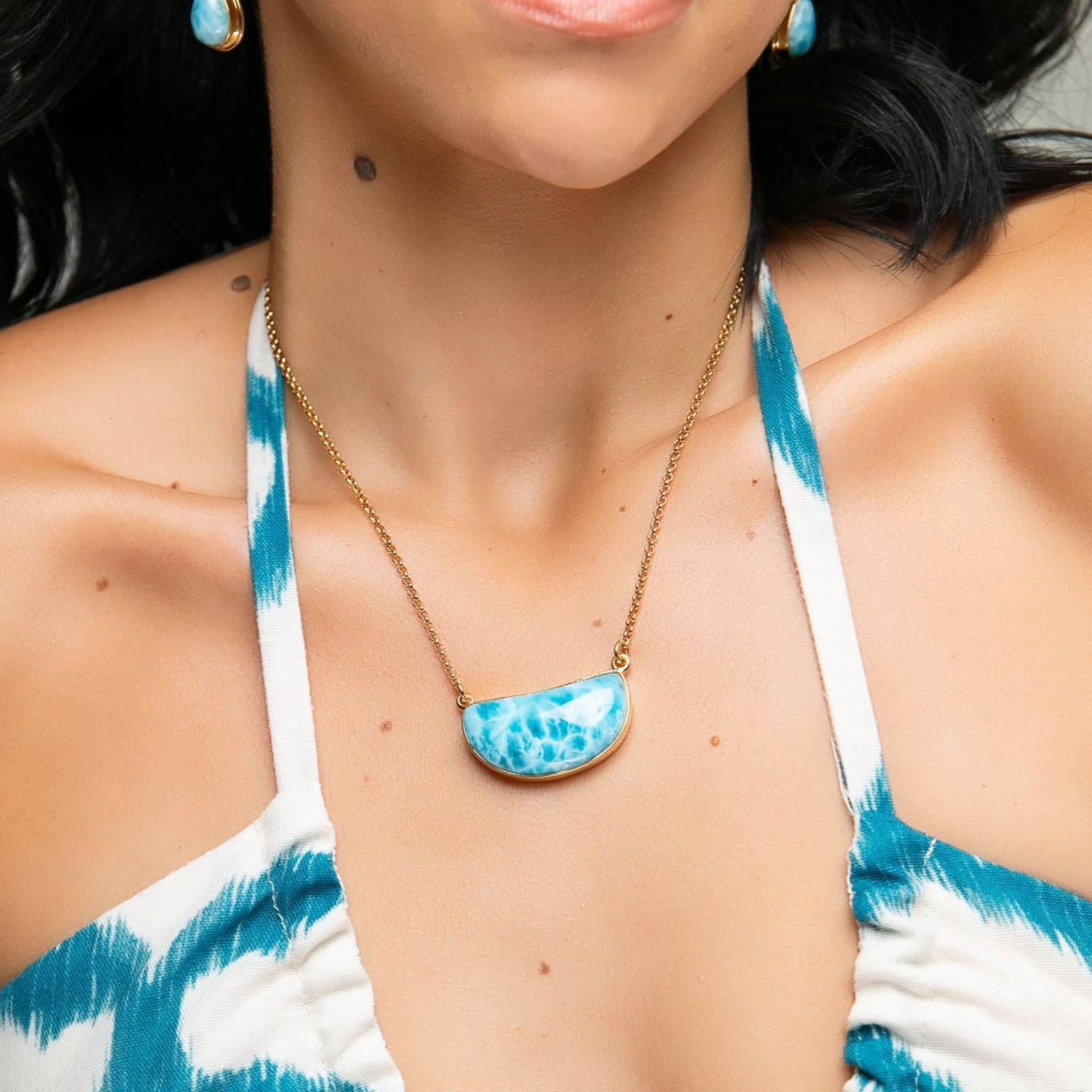
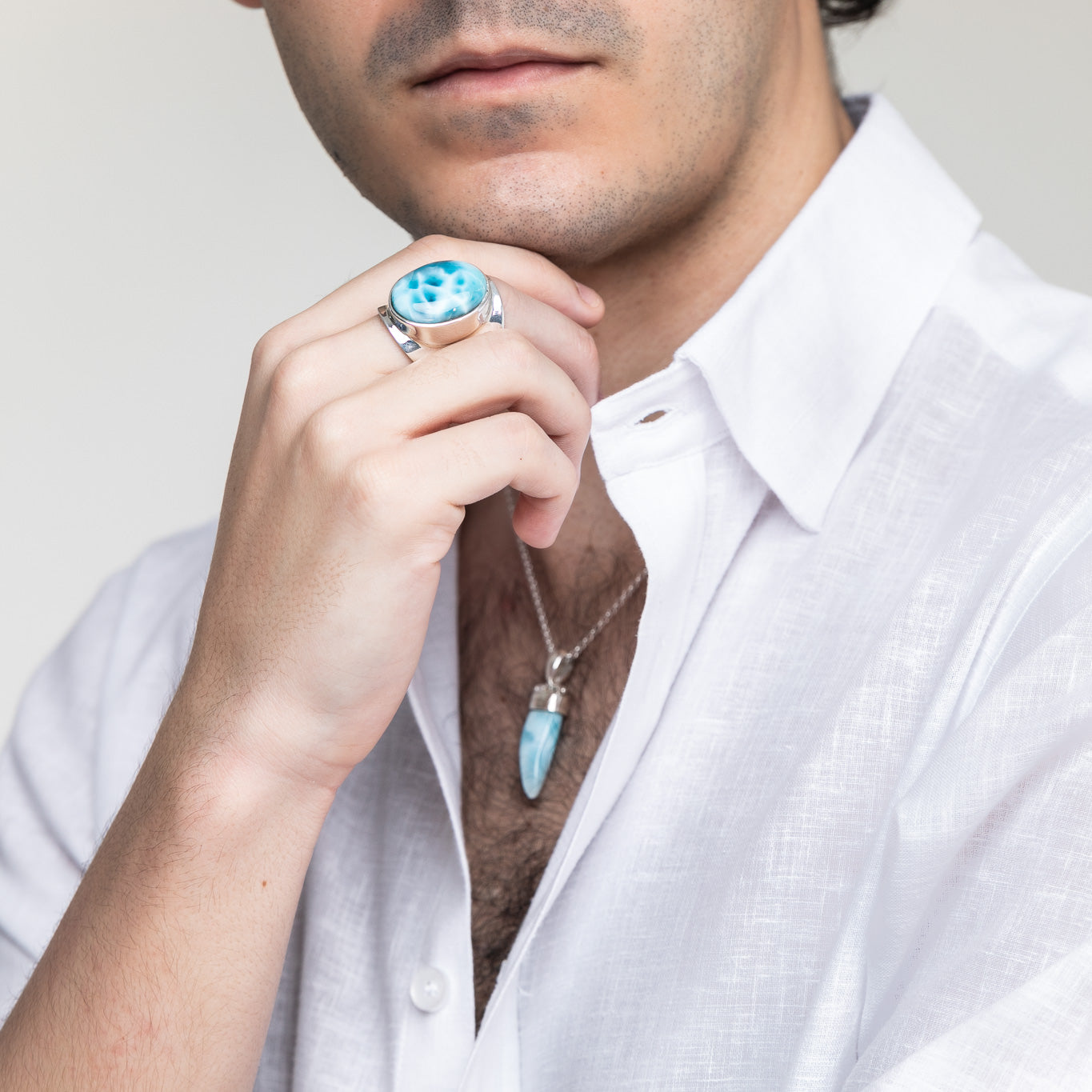
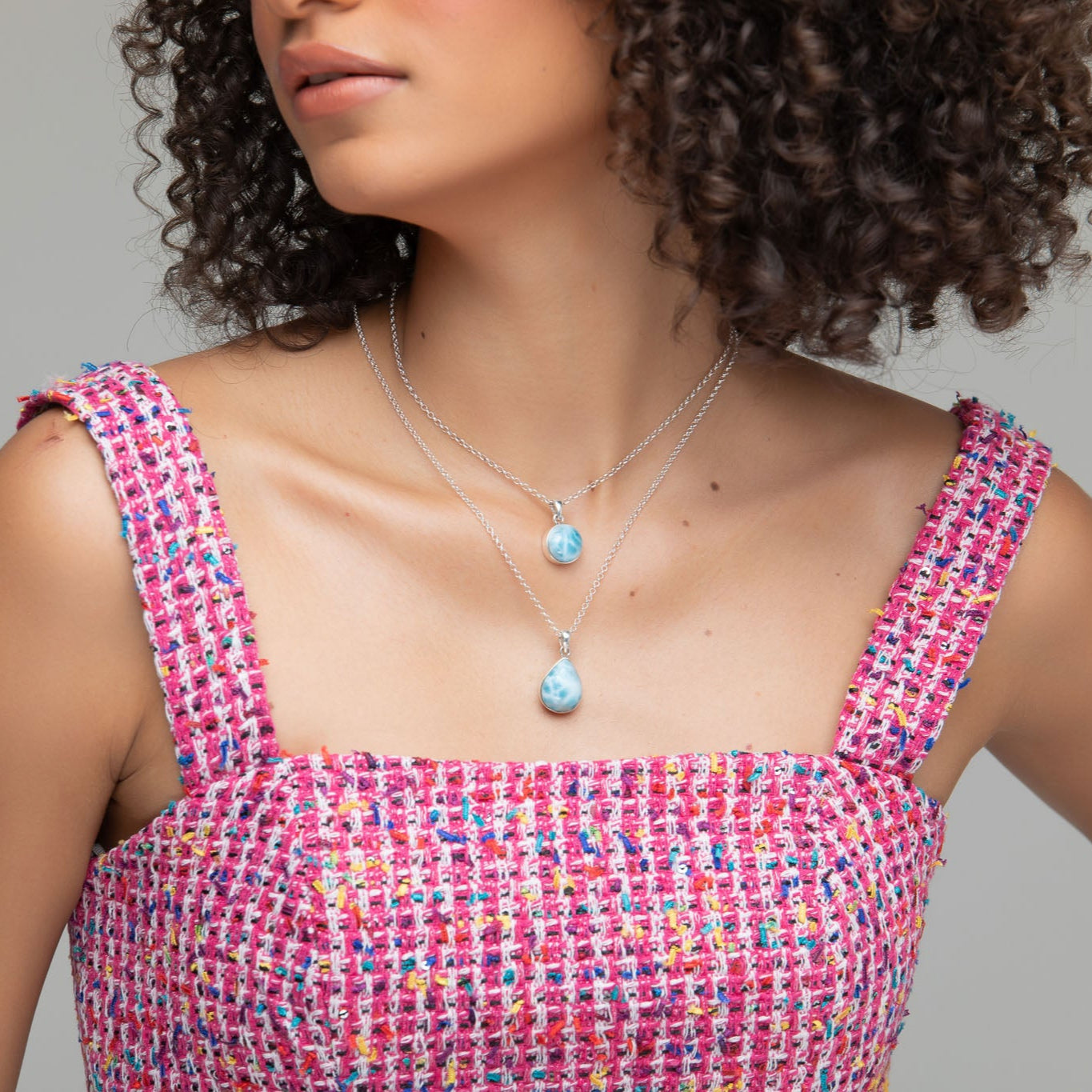
- Craftsmanship: High-quality Larimar is usually set in solid metals such as sterling silver or gold vermeil, reflecting the value of the stone.
For peace of mind, purchasing from trusted sources that specialize in Larimar and are based in or directly connected to the Dominican Republic is always recommended.
From Rough Stone to Finished Jewelry
Transforming rough Larimar into finished jewelry requires selection, cutting, and polishing by experienced artisans. The stone must be oriented to highlight its best patterns, avoid weak spots, and respect its natural structure. This process, combined with the limited yield of high-grade material, explains why each finished piece feels truly one of a kind.
Continue Learning About Larimar
If you would like to explore the cultural story of Larimar, the meanings behind its many names, and its place in Dominican identity, read our complementary article: Larimar: The Blue Jewel of the Caribbean & Its Synonyms.
For a more visual, easy-to-follow overview of Larimar—from how it’s mined to how to wear it—visit The Larimar Guide.

1 comment
can i have a larimar for free
Leave a comment